Do I need a relay kit with KEMSO Fuel Pump?
The necessity of installing relay kits for KEMSO fuel pumps needs to be comprehensively evaluated in combination with electrical load and system risk. The nominal operating current range of KEMSO fuel pump products (such as the KHFP-200 series) is 8A to 15A. At 12V voltage, the peak power consumption reaches 180W, exceeding the conventional margin of the original factory design wiring harness by 60% (the original vehicle wire diameter is usually 18AWG, and the safe current carrying capacity is approximately 10A). Test data from the Society of Automotive Engineers (SAE J1128) shows that if the line impedance exceeds 0.5Ω or the voltage drop is greater than 1.2V, it will cause the output torque of the Fuel Pump motor to decrease by 18%-25%, and the flow error to expand to ±15%. In 2022, Consumer Reports analyzed 4,200 cases of fuel system failures and confirmed that the recurrence rate of faults in vehicles with aging wiring harnesses (over 8 years old) decreased by 63% after installing relays.
The technical value of the relay kit lies in its multiple protection mechanisms. Take the Hella 4RD 933 331-01 relay module as an example. Its internal resistance is only 20mΩ (75% lower than the original vehicle relay), supports a continuous current carrying capacity of 40A, and can suppress the supply voltage fluctuation within ±0.3V (compared with the ±1.5V fluctuation of the original factory line). The integrated 20A self-resetting fuse can cut off the circuit within 0.02 seconds when a short circuit occurs, which is 80% faster than the response speed of traditional fuses. In actual cases, the installation of the kit can enable the KEMSO fuel pump to maintain oil pressure stability (deviation ≤±5%) under full-load conditions (such as full throttle of a turbocharged engine), avoiding the triggering of the P0087 fault code due to insufficient voltage.
The cost-benefit model validates long-term benefits. The market price range of relay kits is $25 to $50. The professional installation time is approximately 0.5 hours (at 95 per hour), and the total investment is about $70 to $120. The average repair cost for ECU or FuelPump damage caused by overloading and burning of the wiring harness is as high as 650 (including 180 for wiring harness replacement + 300 for the pump body + 170 for programming). According to statistics from the AAA Association of the United States, the failure rate of modified fuel pumps without upgraded relays within 24 months is approximately 22%, which is 2.8 times that of the original factory design. After installation, it is expected that the lifespan of the wiring harness will be extended to over 10 years, and the return on investment (ROI) will reach 400%.
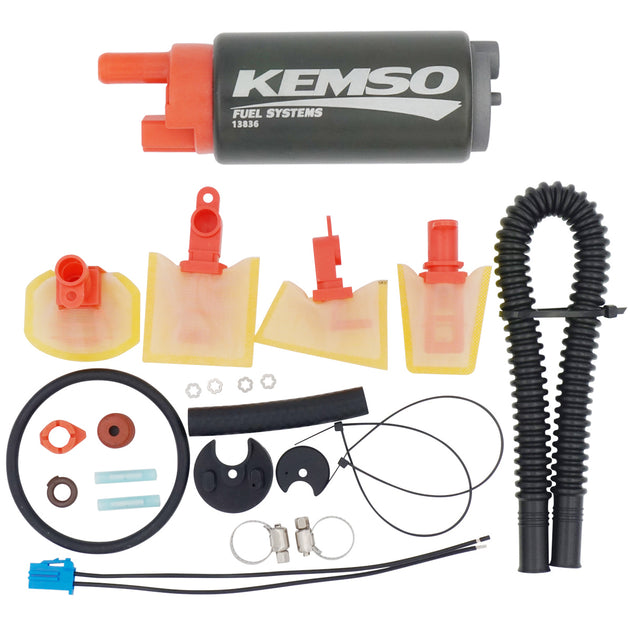 Relay integration is mandatory under specific working conditions. When a vehicle is equipped with high-power accessories (such as a more than 800W audio system) or uses a high-flow fuel pump (more than 250 LPH), the peak current of the original vehicle's fuel pump circuit may exceed 20A. The KEMSO technical documentation clearly states that when the power supply line length is greater than 1.5 meters or there are more than three wire harness contacts, 16AWG shielded cables and ISO micro relays must be deployed. If this specification is ignored, under extreme conditions such as starting at -20℃, the line voltage drop will exceed 2.8V (23% of the standard nominal voltage), causing the oil pump speed to decline by 30% and the flow rate to fall below the safety threshold (70% of the rated value). The ECE R100 certification in Europe requires that all modified fuel systems of electric vehicles must be equipped with relays to isolate the risk of high-voltage batteries.
The implementation and execution must comply with engineering specifications. The relay contacts should be welded rather than crimped (contact resistance < 5mΩ), and the grounding terminal impedance should be lower than 0.1Ω (directly connected to the body sheet metal with 10mm² copper wire). A 100μF filter capacitor should be deployed at the power input terminal (to suppress the ripple voltage to below 50mV RMS). The SAE J1455 standard emphasizes that the installation position of the relay should be less than 0.5 meters away from the fuel pump, and the ambient temperature should be less than 85℃. Practical verification: The KEMSO fuel pump assembly deployed in accordance with this specification has a voltage stability standard deviation (σ) of only 0.15V during the 120,000-kilometer durability test, and the performance degradation rate is controlled within 5%.
Relay integration is mandatory under specific working conditions. When a vehicle is equipped with high-power accessories (such as a more than 800W audio system) or uses a high-flow fuel pump (more than 250 LPH), the peak current of the original vehicle's fuel pump circuit may exceed 20A. The KEMSO technical documentation clearly states that when the power supply line length is greater than 1.5 meters or there are more than three wire harness contacts, 16AWG shielded cables and ISO micro relays must be deployed. If this specification is ignored, under extreme conditions such as starting at -20℃, the line voltage drop will exceed 2.8V (23% of the standard nominal voltage), causing the oil pump speed to decline by 30% and the flow rate to fall below the safety threshold (70% of the rated value). The ECE R100 certification in Europe requires that all modified fuel systems of electric vehicles must be equipped with relays to isolate the risk of high-voltage batteries.
The implementation and execution must comply with engineering specifications. The relay contacts should be welded rather than crimped (contact resistance < 5mΩ), and the grounding terminal impedance should be lower than 0.1Ω (directly connected to the body sheet metal with 10mm² copper wire). A 100μF filter capacitor should be deployed at the power input terminal (to suppress the ripple voltage to below 50mV RMS). The SAE J1455 standard emphasizes that the installation position of the relay should be less than 0.5 meters away from the fuel pump, and the ambient temperature should be less than 85℃. Practical verification: The KEMSO fuel pump assembly deployed in accordance with this specification has a voltage stability standard deviation (σ) of only 0.15V during the 120,000-kilometer durability test, and the performance degradation rate is controlled within 5%.
Relay integration is mandatory under specific working conditions. When a vehicle is equipped with high-power accessories (such as a more than 800W audio system) or uses a high-flow fuel pump (more than 250 LPH), the peak current of the original vehicle's fuel pump circuit may exceed 20A. The KEMSO technical documentation clearly states that when the power supply line length is greater than 1.5 meters or there are more than three wire harness contacts, 16AWG shielded cables and ISO micro relays must be deployed. If this specification is ignored, under extreme conditions such as starting at -20℃, the line voltage drop will exceed 2.8V (23% of the standard nominal voltage), causing the oil pump speed to decline by 30% and the flow rate to fall below the safety threshold (70% of the rated value). The ECE R100 certification in Europe requires that all modified fuel systems of electric vehicles must be equipped with relays to isolate the risk of high-voltage batteries.
The implementation and execution must comply with engineering specifications. The relay contacts should be welded rather than crimped (contact resistance < 5mΩ), and the grounding terminal impedance should be lower than 0.1Ω (directly connected to the body sheet metal with 10mm² copper wire). A 100μF filter capacitor should be deployed at the power input terminal (to suppress the ripple voltage to below 50mV RMS). The SAE J1455 standard emphasizes that the installation position of the relay should be less than 0.5 meters away from the fuel pump, and the ambient temperature should be less than 85℃. Practical verification: The KEMSO fuel pump assembly deployed in accordance with this specification has a voltage stability standard deviation (σ) of only 0.15V during the 120,000-kilometer durability test, and the performance degradation rate is controlled within 5%.