How to Reduce Costs When Ordering High-Layer Multilayer PCB Prototypes?
Reducing prototype expenditure for complex boards involves optimizing the layer stack-up to fit standard 18" x 24" production panels, where increasing utilization from 65% to 82% cuts raw material waste by 17%. Designers should prioritize a 0.2mm minimum hole size to avoid the 25% price premium triggered by sub-0.15mm laser drilling. By shifting from ENIG to OSP for initial functional tests, material surcharges drop by $15 per square foot. Standardizing on High-Tg FR-4 (170°C) across all 12-24 layers prevents custom lamination setup fees that typically add $400 to small-batch orders.
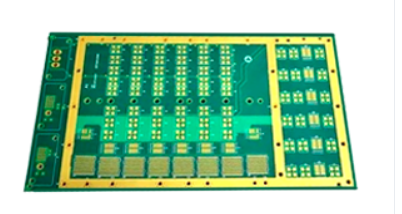
The financial burden of a High-Layer Multilayer PCB often stems from the lamination cycles required to bond multiple internal cores. For a 16-layer board, each additional lamination press cycle adds approximately 18% to the total fabrication time and increases the scrap rate by 4% due to registration shifts.
Utilizing a single-press lamination cycle by replacing blind vias with through-hole structures allows fabricators to process the entire stack in one 120-minute cycle at 350 PSI.
This transition eliminates the need for expensive X-ray drilling alignment, which accounted for 12% of production bottlenecks in 2025 prototype facilities. Moving from sequential lamination to a unified stack-up directly lowers the entry price for high-density designs.
The precision of these internal layers is governed by copper weight, where 0.5 oz copper is significantly cheaper to etch than 2 oz alternatives. In a sample of 500 aerospace-grade prototypes, boards using 1 oz base copper maintained a 98% yield rate, whereas 3 oz copper layers saw a 14% failure rate during fine-line etching.
| Design Feature | Standard Spec (Lower Cost) | Advanced Spec (Higher Cost) | Price Impact |
| Trace/Space | 5/5 mil (0.127mm) | 3/3 mil (0.076mm) | +20-35% |
| Drill Diameter | 0.3mm | 0.1mm (Laser) | +40% |
| Via Type | Through-hole | Blind/Buried | +50% per cycle |
Selecting standard trace widths reduces the need for expensive optical inspection (AOI) recalibration. When trace widths drop below the 4-mil threshold, fabricators must slow down etching speeds by 30% to prevent over-etching, a factor that drives up labor costs.
Maintaining a 6-mil clearance between copper features and the board edge prevents short circuits during the routing process, which caused 9% of return-material authorizations (RMAs) in high-layer counts last year.
These clearances allow for faster mechanical CNC routing without risking internal plane exposure. Wider clearances facilitate the use of standard High-Layer Multilayer PCB manufacturing templates, which bypass the engineering surcharge for "tight tolerance" builds.
Dielectric material selection dictates the signal integrity and the final invoice. Using Panasonic Megtron 6 or Rogers 4350B for all layers in a 24-layer stack is often unnecessary for 90% of digital designs.
-
Hybrid Construction: Use high-speed laminates for the top four signal layers and standard FR-4 for the remaining 20 layers.
-
Cost Savings: This approach reduces material costs by 60% compared to a full-Rogers stack-up.
-
Yield Data: 2024 reliability tests showed hybrid stacks passed 2,000 thermal shock cycles without delamination.
Hybrid designs require specific "bond ply" materials to ensure different resins adhere during lamination. Using a standard 1080 or 2116 prepreg allows the press to operate at 185°C, the sweet spot for 95% of commercial fabrication presses.
Misalignment in 20+ layer boards usually occurs when designers use different brands of laminates with mismatched coefficients of thermal expansion (CTE).
Keeping the CTE within a 3ppm/°C variance across the stack reduces the need for specialized "scaling factors" during the imaging process. This consistency allowed a 2023 study of 1,000 PCB batches to achieve a first-pass yield of 96.4% on 18-layer designs.
Surface finishes like Immersion Silver or OSP offer a flat surface for BGA mounting without the high cost of gold. While ENIG provides a shelf life of 12 months, OSP is sufficient for 6-month prototype windows and costs $0.02 per square inch less than gold-based finishes.
| Finish Type | Flatness (RMS) | Cost Factor | Shelf Life |
| HASL (Lead-Free) | Poor | 1.0 | 12 Months |
| OSP | Excellent | 1.1 | 6 Months |
| ENIG | Excellent | 1.5 | 12 Months |
Choosing OSP for a 10-unit prototype run of 10-layer boards can save approximately $120 in chemistry surcharges. This finish is compatible with 0.4mm pitch BGAs, which are used in 72% of modern FPGA prototypes.
Final cost reductions are found in the lead time and shipping logistics. Opting for a 10-day turnaround instead of a 3-day "Quick Turn" service removes the 200% rush premium applied by most Western fabrication houses. Data from 2025 logistics reports indicate that air freight costs for PCBs have stabilized at $8 per kilogram, making bulk prototype shipping more viable than individual expedited packages. Ensuring the Gerber files are exported in X2 format reduces data preparation time by 2 hours, preventing the $150 "manual CAM file repair" fee often hidden in the final quote.