Who Controls a Battery When the Site Controller Loses Communications
A battery control specification should explain what happens when a message stops arriving. Cloud access, a site controller and a battery management system (BMS) perform different jobs; a connected diagram does not show which one has authority during a fault. Identify that authority and the fallback behaviour before the system is accepted.
The owner needs to distinguish losing visibility from losing control. A portal can be unavailable while local operation continues. A failed measurement link can be more consequential if the controller no longer knows the site's electricity flow.
Draw the command and measurement paths
On one page, show the battery equipment, power conversion equipment, site controller, relevant meters and remote services. Mark which connections carry measurements, which carry operating commands and which are used only for reporting.
Then name the authority for each operating limit. The battery's own protective functions and the site's contractual electricity limit are not interchangeable. Equipment protection does not, by itself, demonstrate that a building will remain below its agreed grid import limit.
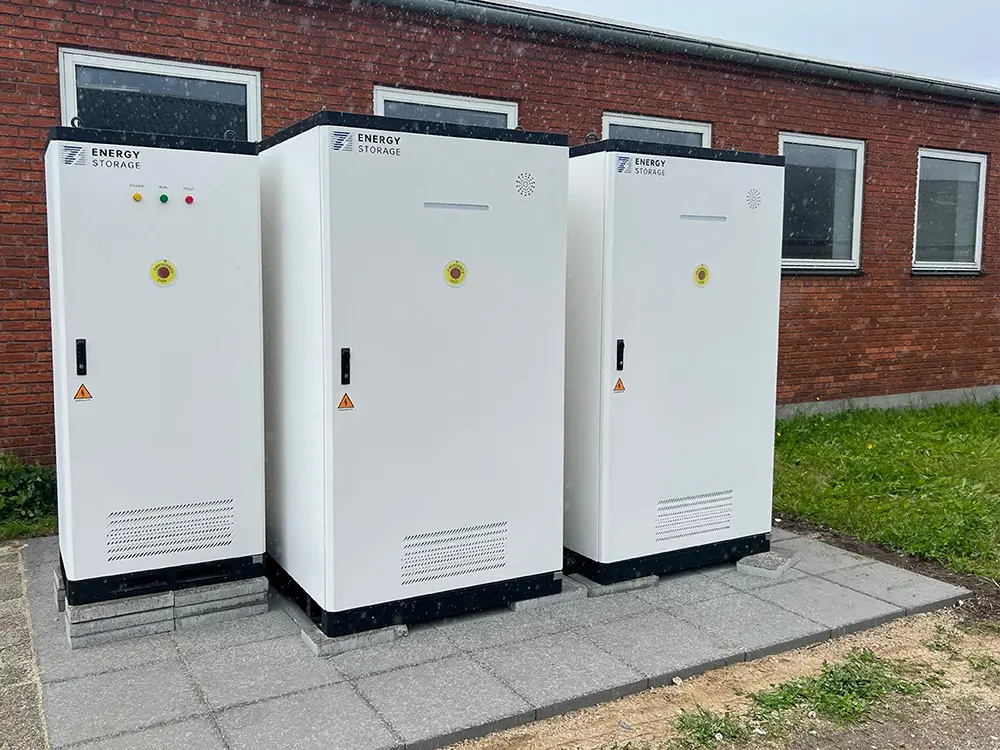
BENY describes batteries, a BMS, power conversion and energy management among the elements of its industrial and commercial storage offering. For an actual project, ask for those functions to be shown on the offered architecture, with responsibility and communication boundaries made explicit.
Specify fallback for each lost connection
Avoid a single instruction that says continue safely. Ask what the system does if it loses the cloud service, the site meter, the battery communication path or an external dispatch signal. The answers may differ because the missing information and control authority differ.
For each case, record the last valid information the controller can use, when that information becomes stale, the permitted operating state and how the operator is informed. Do not assume that retaining the last command is always acceptable, or that stopping battery discharge is always the best site-level response.
The appropriate fallback needs to be designed for the installation. Any change affecting protection, equipment limits or an agreed electrical operating boundary belongs with the responsible engineering and supplier teams.
Test the effect on the whole site
Consider a hypothetical facility with a 300 kW grid import limit. At the same AC measurement boundary, building demand is 350 kW while the battery supplies 80 kW, leaving 270 kW from the grid. If a communication fault makes the battery stop, import could rise to 350 kW unless another agreed action changes the building demand.
The arithmetic does not mean a battery should keep discharging without valid information. It shows why the fallback must consider the building, battery and available load controls together. A protective response that is appropriate for one device may leave the facility unable to meet its normal service commitment.
Use this kind of operating scenario to identify a reduced-service plan. The design team should explain which loads can be curtailed, which limit is enforced locally and what the facility manager sees when normal dispatch is unavailable.
Make recovery a controlled transition
Ask what happens when the missing connection returns. Fresh measurements, current operating mode and the latest authorised settings need to be reconciled before normal dispatch resumes. A backlog of old messages should not be mistaken for a request to repeat old actions.
Define whether recovery is automatic or requires operator approval for each fault class. Record how the system avoids conflicting commands from a remote service and a local operator during the transition. These answers should be specific enough to demonstrate, rather than expressed only as general reliability claims.
Keep a witnessed result for each scenario
Agree supplier-approved tests before commissioning. Use controlled simulations, with the responsible specialists present, rather than disconnecting a live control path without a plan.
For each test, retain the starting state, simulated fault, expected fallback, actual equipment response, site measurement and recovery result. Include timestamps and the software versions involved. Record any untested operating mode as an open item.
The final deliverable is a short sequence of operations that an operator can follow and a service team can investigate. It answers who is in control when communications fail, what service remains available and how the site returns to its normal operating arrangement.